The article from Vincent Bussière in the magazine Make better use of your money.
Released on Friday, March 26, 2022.
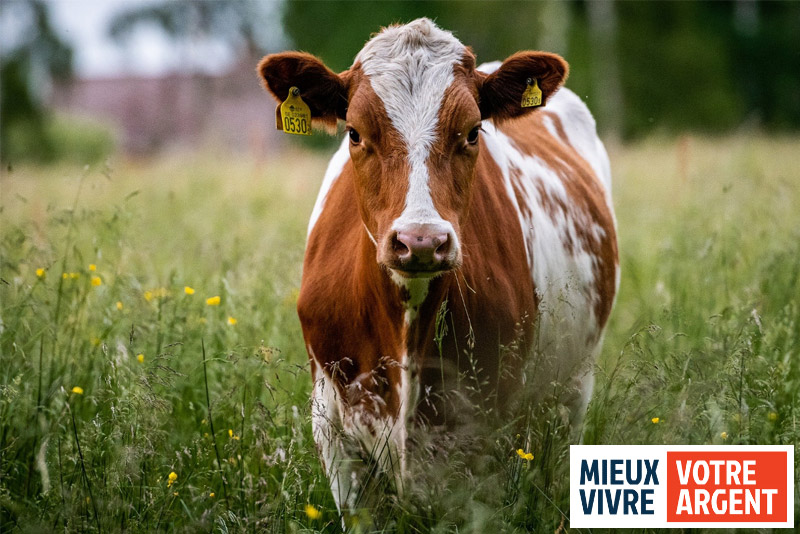
Investing in cows entrusted to a farmer provides an attractive return, with favorable tax treatment. A closer look at Elevage et Patrimoine, which offers this type of investment.
Since the UBS affair, the expression "milk book" has acquired a bad reputation (the bank was fined €10 million). Yet the term refers to the world of cattle, which can offer opportunities for savers. Investing in a cow is considered an unusual investment. Many companies offer this option, including Elevage et Patrimoine, an asset management company founded in 1993 and approved by the French Financial Markets Authority (AMF). The benefit? "Diversifying your assets over the long term, reducing your taxes, and supporting French agriculture," as summarized by its president, Sébastien Dumais. All this, according to him, with a gross annual return of nearly 5% over the last ten years.
The principle: an investor buys a dairy cow (starting at €1,485). This cow is selected by the technicians of Gestel, the asset manager's technical department, and entrusted to one of its 3,000 partner farmers. The farmer manages the cow and is paid from the milk sales, while the investor can choose between two returns, starting in the third year: the annual proceeds, or a lump sum, or capitalization, namely rights to a heifer descended from the cow to perpetuate their investment. All of this is taxed as agricultural profit (BA) with an 87% allowance on pre-tax revenue for a holding period of at least ten years. If the investor chooses to sell the cow, the proceeds will be reduced by 10% in fees.
The risks are very real.
“Our investors acquire assets almost equivalent to real estate, while simultaneously contributing to the restoration of our food sovereignty,” emphasizes Sébastien Dumais. He then highlights the potential of French milk, considered the best in the world. “Since the 2010 crisis, prices have remained strong. This trend is also benefiting from a decrease in the number of dairy farmers and an increase in the size of dairy farms, which helps control costs and risks,” he continues. The livestock managed by Elevage et Patrimoine comprises 30,000 head of cattle (1% of the national total), a tenth of which are certified organic, with 2,000 head acquired annually.
This investment is not without risk: capital loss in the event of war, natural disaster, or uninsured pandemic. Similarly, the invasion of Ukraine and sanctions against Russia are driving up the prices of grain and animal feed, which these cows consume. As for the potential lack of female offspring, this risk is mitigated by farmers purchasing frozen semen and using artificial insemination. "Our contracts require our farmers to..."
"To renew their herd with heifers," explains Sébastien Dumais. What about the liquidity risk if the investor prefers to sell their animal? It will be resold for meat, at a discount of over 40%.
Note: Supporting livestock farmers can also be done through microcredit, as offered by the Zebunet association, which finances zebu cattle and pigs in Vietnam, Madagascar, and Africa. "It's about empowering local farmers. We study their business plan, repayment terms, and schedules," explains Hanh Ha, its director, who boasts of having financed 10,000 animals and entrusted them to more than 8,000 families over the past twenty years. All this, with the aim of...
The investor receives a tax deduction of 66% of their investment under the law on patronage.